Symbolism and significance of Parshvanath Bhagwan iconography

Chapter Three

Symbolism &
Iconography

The serpent, the canopy, the meditative form — a complete visual grammar of protection, transcendence and inner stillness.

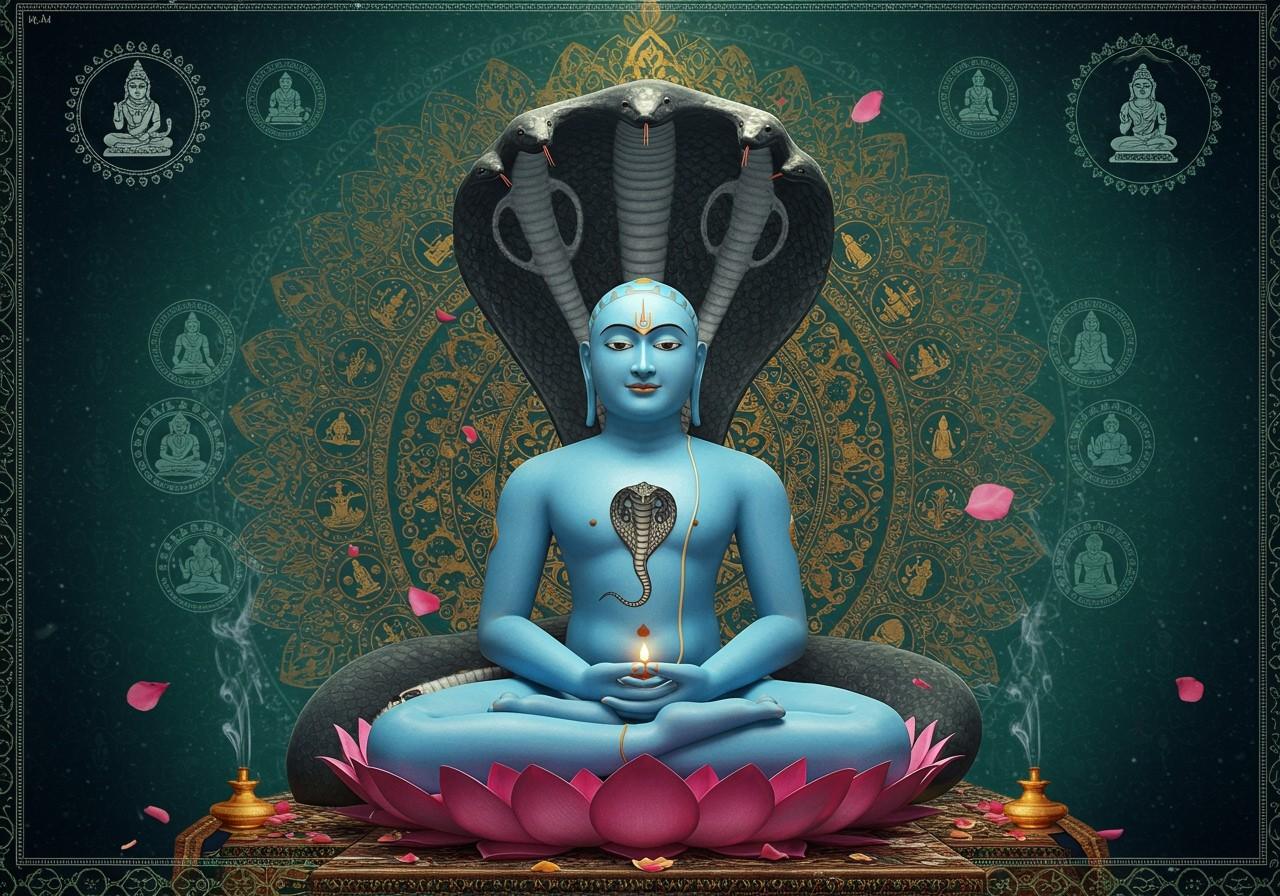
Of all the twenty-four Tīrthaṅkaras of the Jain tradition, none is more immediately recognisable in iconography than Pārśvanātha. The reason is a single, unforgettable image: a meditating ascetic, eyes lowered in equanimity, sheltered from above by the great hood of a multi-headed cobra. To behold the image is to read, in one glance, the central teaching of his life — that the storms of the world cannot disturb a mind anchored in non-violence, truth and inward stillness.

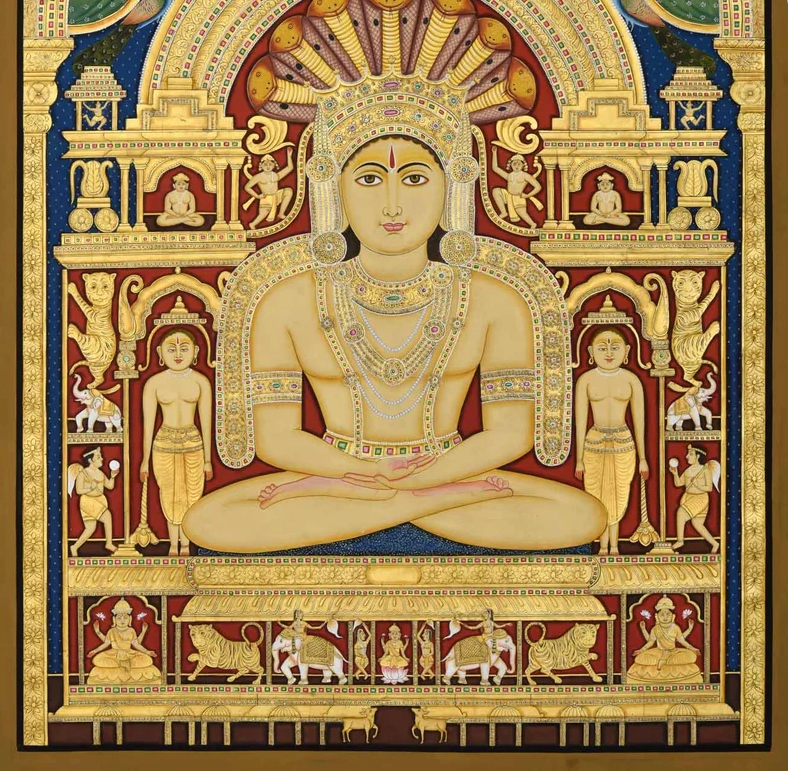
Detailed iconography of Parshvanath Bhagwan showing the seven-hooded serpent canopy

Lāñchana · The Identifying Symbol

The Serpent.

In Jain iconography, every Tīrthaṅkara is identified by a unique lāñchana — a symbol carved at the base of the idol that allows the worshipper to recognise the figure beyond doubt. The lāñchana of Pārśvanātha is the serpent: the very being he once rescued from the fire of an unwise ascetic, and who, in the form of the divine serpent king Dharaṇendra, would later return to shelter him during meditation.

The symbol is therefore not borrowed from myth as decoration. It is autobiography in stone — a remembrance of a single act of compassion that, by the unbroken law of karma, returned as protection.

  • LāñchanaSerpent (Sarpa / Nāga)
  • YakṣaDharaṇendra — the protective serpent king
  • YakṣiṇīPadmāvatī — the lotus-borne goddess of compassion
  • TreeDhātakī — under which Keval Gyan was attained
  • ColourBlue / dark green — emblem of equanimity
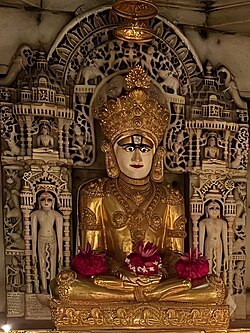
Shankheshwar Parshvanath idol with seven-hooded serpent canopy above the head

Phaṇa-maṇḍapa · The Canopy

The Multi-Hooded Shelter.

The canopy that arches above his head — most often rendered as seven serpent hoods, sometimes nine, occasionally one — is the visual centrepiece of every Pārśvanātha icon. Tradition holds that as he meditated in the depth of his austerities, a sudden storm broke and the serpent king Dharaṇendra rose from the earth, expanding his great hood to shelter the silent ascetic from the rain.

Symbolically, the canopy speaks at three levels at once — and an attentive viewer reads all three.

  • OuterProtection — the natural world bowing to the meditating soul
  • InnerEquanimity — the mind unmoved by storm or stillness alike
  • EsotericTranscendence — kuṇḍalinī rising as the sevenfold canopy of awakened consciousness
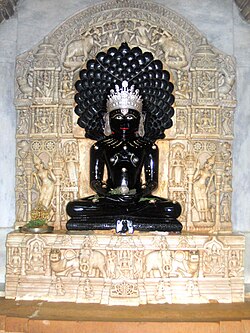
Classical Jain iconography of Parshvanath Bhagwan with intricate detail

A Visual Grammar

Every detail. Every direction.
Every gesture is teaching.

Iconographic Postures

The Two Sacred Stances

Across temples and centuries, Pārśvanātha is depicted in one of two strictly meditative postures — never seated upon a lion or standing in worldly gesture, only in absolute spiritual concentration.

POSTURE · I

PadmāsanaThe Lotus Seat

Seated cross-legged in perfect lotus posture, palms resting one upon the other in the lap, eyes lowered to the tip of the nose. This is the seated form of inward absorption — the body composed, the breath quiet, the mind dissolved into stillness.

POSTURE · II

KāyotsargaThe Standing Form

Standing erect, motionless, arms hanging without contact with the body, gaze fixed forward. The very name — kāyotsarga — means "abandonment of the body." It is the standing meditation in which the ascetic, even in upright posture, rests in complete inner withdrawal.

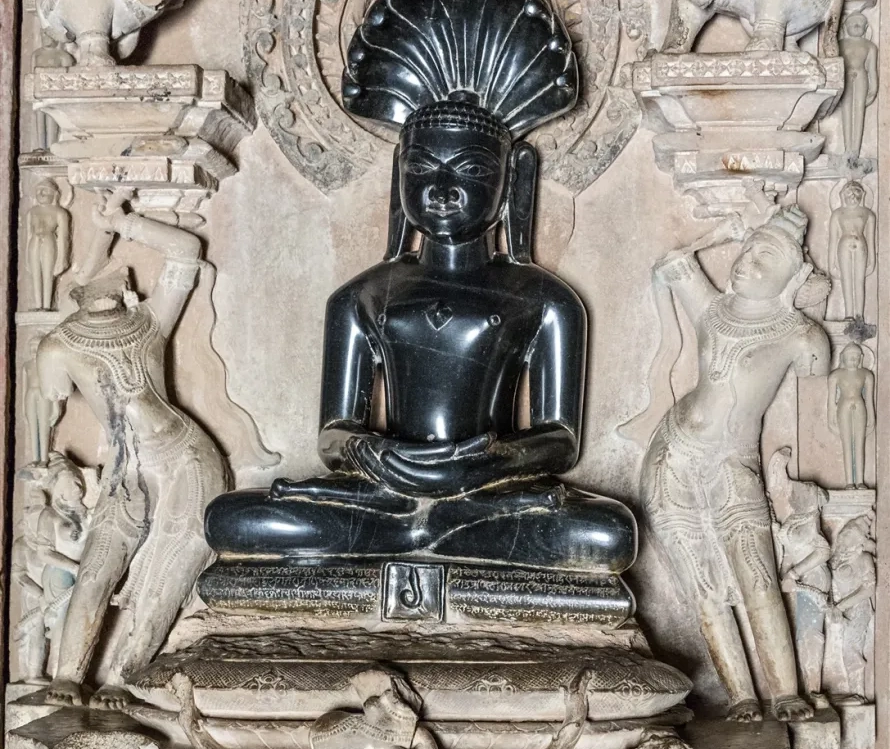
Lodhruva temple sculpture of Parshvanath Bhagwan in classical Jain tradition

Across India · Across Centuries

Temple Depictions.

From the desert sandstone of Lodhruva in Rajasthan, to the marble masterpieces of Patan, the dark-stone Shankheshwar idol of Gujarat, the rock-cut shrines of Karnataka and the towering temples of the Sammed Shikhar pilgrimage in Jharkhand, Pārśvanātha occupies a unique position: he is among the most-installed Tīrthaṅkara figures in all of India.

Many of the most ancient surviving Jain bronzes, terracottas and stone sculptures depict him — a measure both of his historical antiquity and of the deep, continuous reverence in which his image has been held across millennia.

  • Lodhruva11th-century sandstone temple, Rajasthan
  • PatanClassical Solanki-era marble shrines, Gujarat
  • ShankheshwarOne of the most revered Pārśvanātha idols in Jainism
  • Sammed ShikharThe Nirvāṇa peak — most sacred Jain pilgrimage
  • MathurāEarliest known sculptural depictions, dating to early centuries CE
The Wider Vocabulary

Jain Sacred Symbols

The iconography of Pārśvanātha sits within a wider visual grammar. These are the recurring symbols that frame his image and the broader Jain tradition.

Aṣṭamaṅgala

The eight auspicious emblems — Svastika, Śrīvatsa, Nandyāvarta, Vardhamānaka, Bhadrāsana, Kalaśa, Matsya-yugma and Darpaṇa — that accompany temple worship.

Triratna

The Three Jewels — Right Faith, Right Knowledge, Right Conduct — without which liberation is impossible. The Jain path is the harmonious cultivation of all three.

Svastika

The fourfold cycle of birth — heavenly, human, animal and infernal — over which the soul must rise. Among the most ancient and reverent emblems of Indic spirituality.

Ahiṃsā Hand

The open palm with the wheel of dharma at its centre — the iconic Jain emblem of non-violence, with the word Ahiṃsā inscribed within.

“The storm did not part because the world was kind.
The storm passed because he did not move.”
— On the Iconography of Pārśvanātha

Continue Reading

Chapter Four: Historical Importance

Enter the History