Chapter One
The Life & History of
Pārśvanātha
From the courts of Kāśī to the silence of Sammed Shikhar — a biography of renunciation, austerity, omniscience and liberation.
Chapter One
From the courts of Kāśī to the silence of Sammed Shikhar — a biography of renunciation, austerity, omniscience and liberation.
Long before the historical curtain rose upon Mahāvīra and the Buddha, the ancient kingdom of Kāśī — modern Varanasi, on the banks of the Ganga — gave the world a prince who would, in time, walk away from kingship to become a Tīrthaṅkara. According to the Jain tradition, Pārśvanātha was born in the ninth month of the year 872 BCE to King Aśvasena and Queen Vāmā. His arrival, foretold by auspicious dreams, was understood from the very first hour as the descent of a Jina into the world.
Modern historians, while bracketing the dates with academic caution, generally place him in the eighth or seventh century BCE — making him one of the earliest spiritual teachers of the Indic tradition for whom a strong case for historicity can be made. Long before chronicled history settled the names of kings and conquests, his ascetic order was already a recognised current of Indian thought.
A Life in Eight Movements
Eight defining passages that traditionally chart the spiritual ascent of Pārśvanātha — from royal birth to eternal liberation.
Born to King Aśvasena of the Ikṣvāku dynasty and Queen Vāmādevī in Vārāṇasī, the prince was named Pārśva. Tradition records sixteen auspicious dreams seen by his mother — the customary signs of a Tīrthaṅkara’s arrival. His birth lineage placed him among the most honoured kṣatriya houses of ancient India.
Even as a youth, Pārśva displayed an instinctive compassion for living beings. The classical narrative of his rescue of two serpents from the fire of an ascetic — beings he would later behold as the divine Dharaṇendra and Padmāvatī — speaks to a temperament already attuned to the suffering of the smallest life.
At the age of thirty, having lived as a prince and warrior of distinction, Pārśva felt the inward call of dispassion. He renounced the palace, the throne and all possession, took the vow of mendicancy and entered the homeless state — beginning the disciplined journey of a śramaṇa.
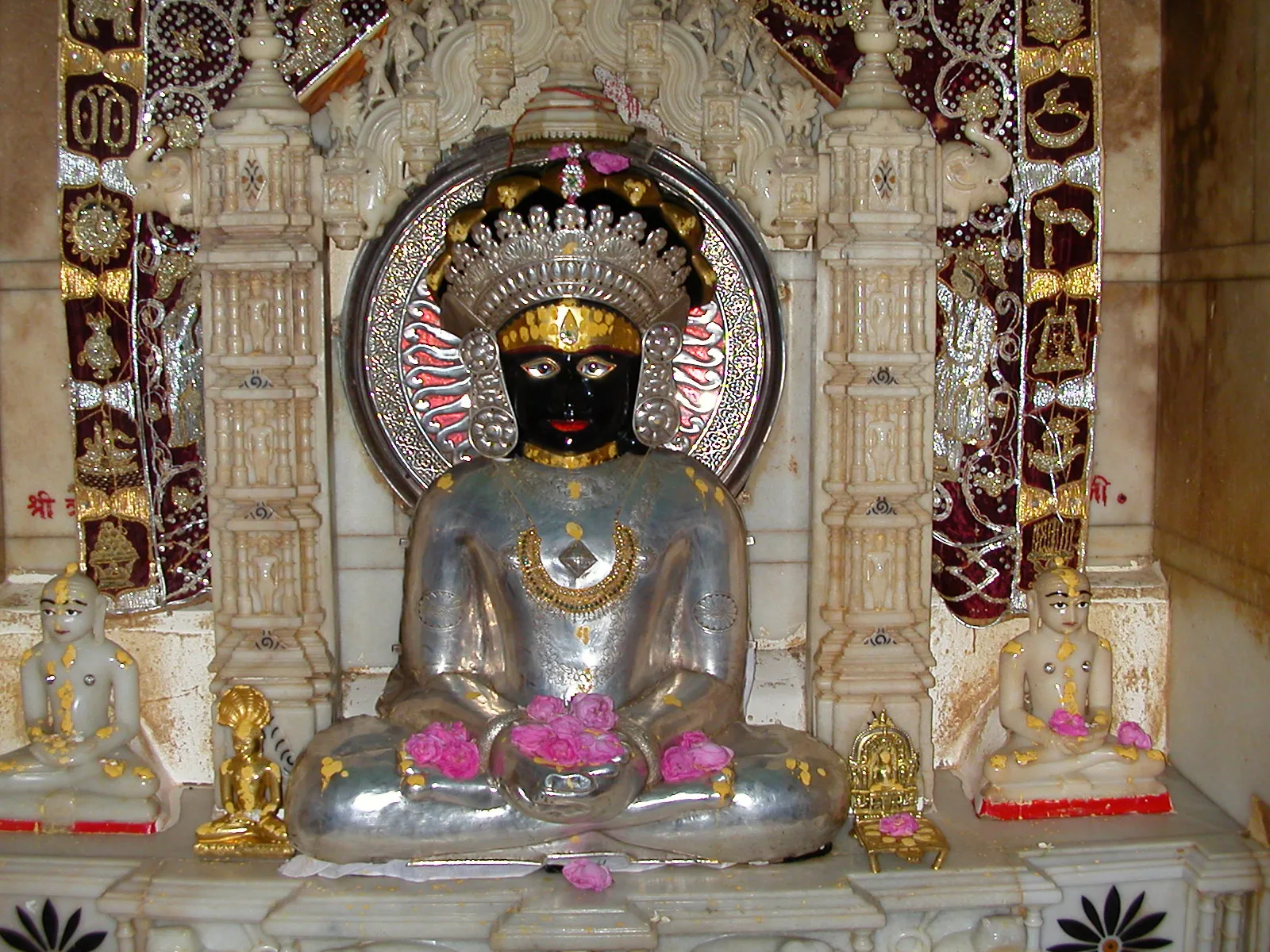
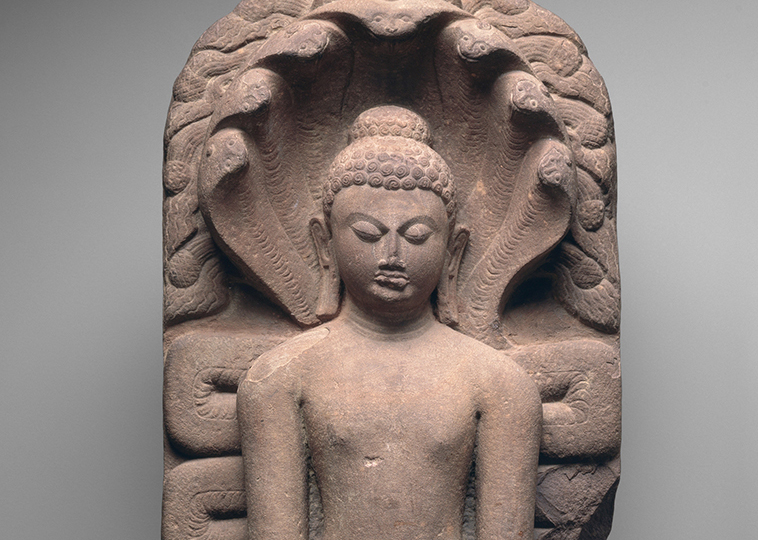
For approximately eighty-three days he undertook severe meditation, withstanding the trials and disturbances of the natural world with unbroken equanimity. It was during this period — beneath a tree, undisturbed by the storm above and the serpent canopy that arched protectively over him — that the iconic image of Pārśvanātha was forever etched into Indian memory.
On the eighty-fourth day of intense meditation, Pārśva attained Keval Gyan — perfect, infinite, all-encompassing knowledge. He became a Jina, a victor over the inner adversaries of attachment and aversion, and was henceforth Tīrthaṅkara Pārśvanātha — a builder of the spiritual ford across the ocean of saṃsāra.
For nearly seventy years he traversed the Indo-Gangetic plains, expounding the four-fold vow of Cāturyāma Dharma — non-violence, truthfulness, non-stealing and non-possession. He gathered an organised community of ascetics and laypersons, men and women alike — the Pārśvāpatya order — that would survive him by centuries.
Tradition records his sangha as comprising thousands of monks (sādhus), nuns (sādhvīs), laymen (śrāvakas) and laywomen (śrāvikās) — a complete Caturvidha Sangha that established Jain practice as a structured spiritual order long before its later refinement under Mahāvīra.
At the age of one hundred, Pārśvanātha attained Nirvāṇa atop the sacred peak of Sammed Shikhar in present-day Jharkhand — known to this day as Pārśvanāth Hill, the most revered Jain pilgrimage site, where twenty of the twenty-four Tīrthaṅkaras are believed to have attained liberation.
Scholarly Estimates
The traditional Jain dating places his life from 872 BCE to 772 BCE — a span of one hundred years. Modern historians, working with cross-referenced textual and archaeological evidence, generally locate him within the eighth to seventh century BCE.
This places Pārśvanātha approximately two hundred and fifty years before Mahāvīra (599–527 BCE), and within striking distance of the early Vedic-Upaniṣadic period — making him one of the earliest historically discernible figures in the broader Indic spiritual landscape.
What is uncontested across academic and devotional sources alike is that by Mahāvīra's time the Pārśvāpatya order was already a centuries-old, organised ascetic community — proof, in itself, of a teacher whose presence had long since reshaped the moral imagination of his age.
A Lineage Carried Forward
The canonical Jain texts make explicit reference to the Pārśvāpatya ascetics — the followers of Pārśvanātha — encountered by Mahāvīra during his itinerant years. Several joined his sangha. The transition between the two great Tīrthaṅkaras was not a rupture, but a continuum.
The Cāturyāma Dharma of Pārśvanātha — non-violence, truth, non-stealing, non-possession — formed the ethical framework Mahāvīra would later expand to five.
Mahāvīra added Brahmacarya (celibacy) as a distinct fifth vow, separating it from the wider category of non-possession that Pārśva had already established.
Both teachers belonged to a single Jain spiritual current — the śramaṇa tradition — that has flowed unbroken from Pārśva's century to our own.
“He left a kingdom and gained the world.— On the Renunciation of Pārśvanātha
He gave up everything and inherited the eternal.”